




Table of Contents
ToggleWhat Is a Goalie Cut Hockey Jersey?
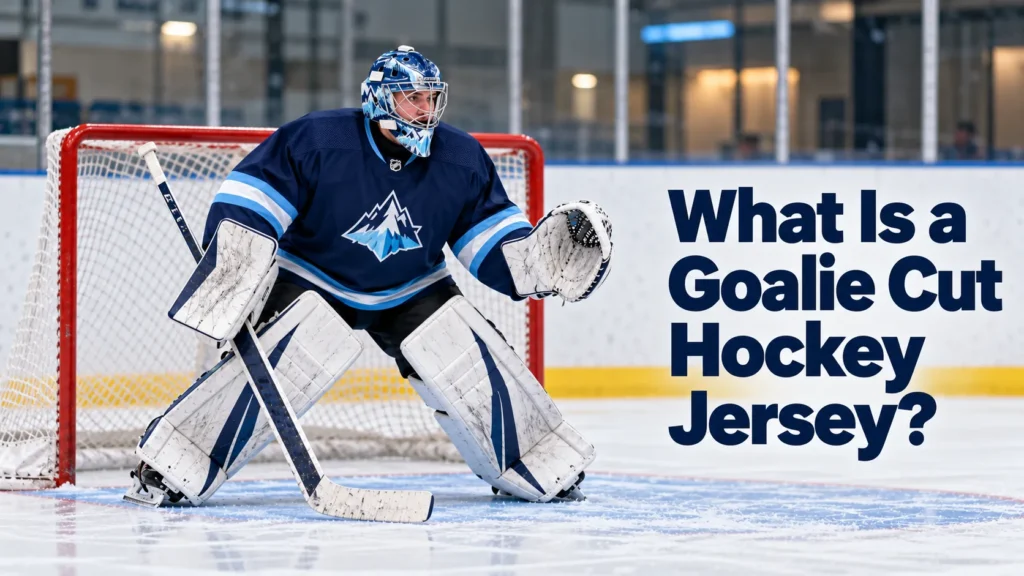
A goalie cut hockey jersey is a goalkeeper-specific jersey pattern, not simply a larger version of a skater jersey. This guide explains how the cut is built, how to compare it with a player cut, how goalie sizing works, and what teams should verify before ordering.
The key is proportion: a goalie jersey must match the dimensions of goaltending equipment while keeping the garment practical for play.
What is a Goalie Cut Hockey Jersey
A goalie cut hockey jersey is a jersey patterned specifically for goaltenders. Instead of scaling a player jersey evenly in every direction, the pattern changes the garment’s proportions where a goaltender needs them most.
That distinction matters when ordering. Moving up several player sizes may add unwanted length without producing the correct chest, shoulder, sleeve, and cuff dimensions of a true goalie pattern.
What Does a Goalie Cut Hockey Jersey Look Like?
Visually, a goalie cut usually has a squarer, more rectangular silhouette than a player cut. The shoulder line appears broader, the torso has less taper, and the sleeves look fuller from the upper arm through the cuff.
On a hanger, that shape can look unusually large. On a dressed goaltender, it should look balanced rather than stretched, sharply tapered, or excessively long.
Are Hockey Goalie Jerseys Dfferent
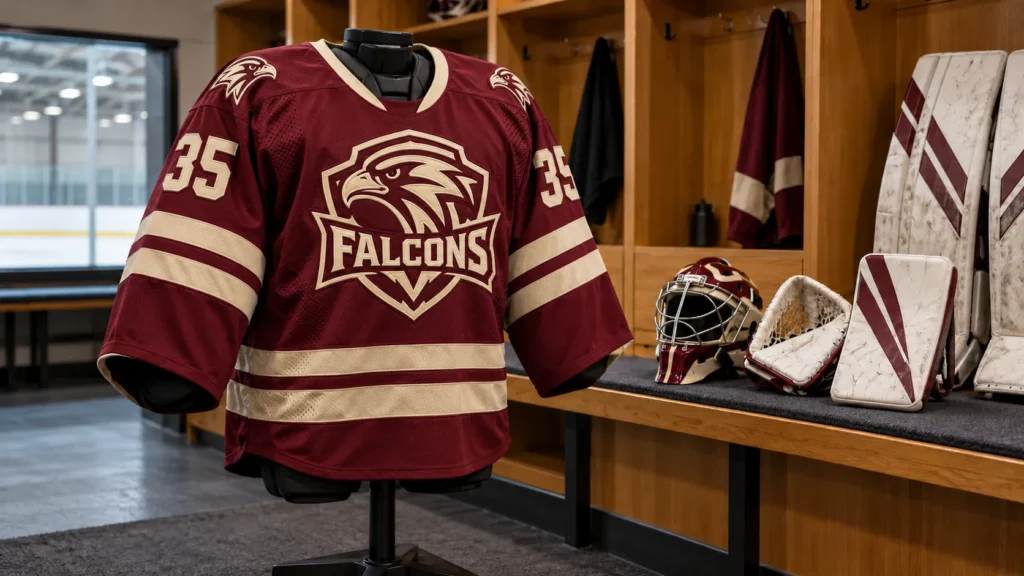
Yes. Hockey rules and equipment standards treat the goalkeeper’s uniform and equipment separately from a skater’s. For example, official rules restrict altered or excessively oversized jerseys, so a proper goalie jersey is designed as a distinct pattern rather than as an intentionally oversized player sweater.
For buyers, the practical difference is construction: goalie cuts use goalkeeper-specific dimensions, while player cuts are built around skater equipment. That is why the correct comparison is pattern-to-pattern, not simply size label-to-size label.
Why Do Goalies Need a Different Jersey?
Goalkeepers wear chest-and-arm protectors with large shoulder floaters, elbow protection, and front/side padding that create a very different upper-body profile from a skater’s pads. The uniform also needs to cover required protective equipment cleanly.
A goalie-specific jersey accounts for that geometry so the fabric does not pull across the shoulders, catch around the elbows, or ride up when the goaltender changes stance.
What Is the Difference Between a Goalie Cut and Player Cut Jersey?
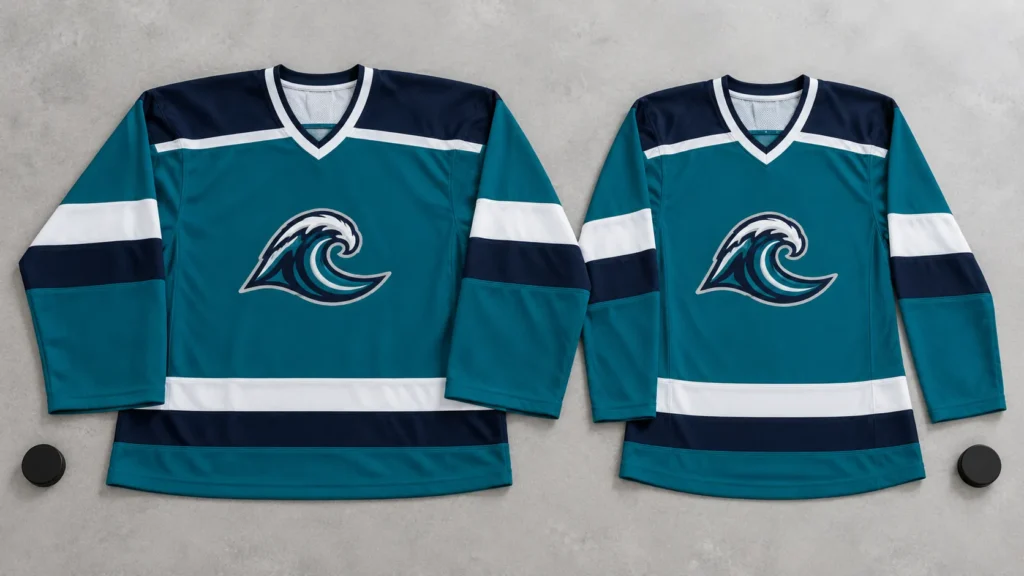
The clearest difference is where the garment adds space. A player cut is comparatively streamlined; a dedicated goalie cut redistributes width through the upper body and arms without simply adding the same amount of length everywhere.
When comparing products, use the supplier’s actual garment dimensions rather than assuming that a larger player size will match a goalie size.
Torso Width
Torso width is best checked as a garment measurement. Compare the flat chest or pit-to-pit measurement on the size chart with a goalie jersey that already fits well. The goal is adequate circumference through the upper body without a large amount of loose fabric below the equipment.
Sleeve Width
Sleeve width matters most through the biceps, elbow area, and opening. Those dimensions should clear the arm units and cuff area without creating a tight point that makes the sleeve ride up.
Overall Shape
A goalie cut is usually boxier and less tapered than a player cut, but it should still have controlled proportions. Extra width should be concentrated where the equipment creates volume rather than turning the jersey into an unnecessarily long garment.
Movement
Use movement as a fit test, not as a reason to buy the largest jersey available. With the jersey on over full equipment, the goalie should be able to raise the glove, rotate the blocker arm, crouch, and recover upright without the fabric tugging across the shoulders or binding at the elbows.
What Size is a Goalie Cut Hockey Jersey
There is no universal goalie jersey size across brands. A “senior large,” numerical size, or goalie-specific label can represent different garment measurements from one supplier to another.
Start with the manufacturer’s goalie chart and note whether it uses youth, junior, intermediate, senior, numerical, or custom sizing. Then compare the listed measurements with the protective equipment worn underneath and, when possible, with a goalie jersey that already fits well.
The most reliable choice is based on measurements, not the size name. This is especially important because the protective equipment worn underneath can vary by age group, model, and individual fit.
How to Measure for a Goalie Cut Hockey Jersey
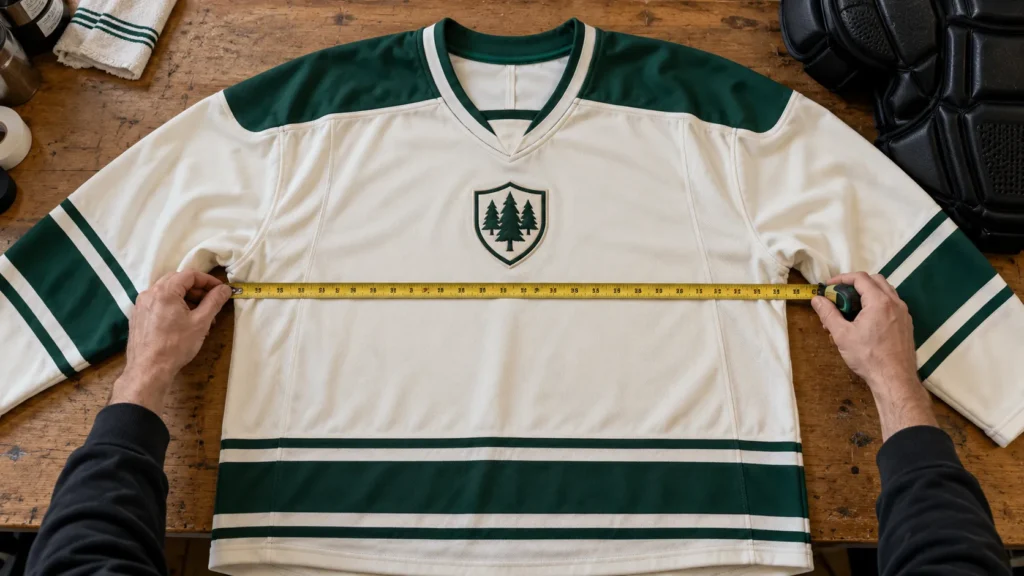
First determine whether the supplier’s chart lists body measurements or finished-garment measurements; the two should not be used interchangeably.
For garment measurements, lay a well-fitting goalie jersey flat without stretching it and record the points requested by the supplier. Common checks include:
- chest or pit-to-pit width
- body length
- sleeve length
- shoulder width
- sleeve or cuff opening
- bottom width
For body-based charts, follow the supplier’s method exactly. If the brand asks for measurements while wearing equipment, use the goaltender’s actual game setup rather than a T-shirt or base layer.
Should You Size Up for a Goalie Cut Jersey?
Do not automatically size up. A goalie cut is already patterned differently, and choosing an extra-large size can introduce excess length, bunching, and loose material that does not improve fit.
If two goalie sizes are close, compare the chart’s chest, sleeve, and length measurements with an existing jersey and follow the manufacturer’s fit guidance. Organized leagues may also limit excessively oversized jerseys, so “bigger” is not always better.
Can You Wear a Regular Hockey Jersey as a Goalie?
A regular player jersey may work for light recreational use if it genuinely clears the goaltender’s equipment, but it is not the ideal reference for an organized team order.
For practices, league play, or repeat team use, a goalie-specific cut is the safer choice because its proportions are intended for a goalkeeper setup. Before ordering, confirm the league’s uniform requirements and tell the supplier which roster positions are goaltenders.
What Makes a Good Goalie Cut Hockey Jersey?
A good goalie jersey should combine correct dimensions, durable construction, and a pattern that stays stable over the equipment. Judge each feature by how it performs in use rather than by how oversized the jersey looks off the ice.
1. Enough Chest Room
Check for tension lines across the chest, shoulder floaters, and upper back. The front should lie cleanly over the protector instead of being stretched tight or ballooning far beyond it.
2. Roomy Sleeves
The sleeve should slide over the arm unit without catching at the elbow or cuff. A useful fit check is whether the sleeve stays in place when the goalie bends and straightens both arms.
3. Suitable Length
Length should provide normal uniform coverage without dropping so low that it bunches around the pants or extends into the space between the legs. Exact limits can depend on the governing league.
4. Durable Fabric
Look for a hockey-grade polyester knit or mesh that tolerates repeated washing, bench contact, and abrasion around high-friction areas. Durability is especially important when the jersey will be used throughout a full season.
5. Breathability
Because goaltenders already wear substantial equipment, airflow and moisture transfer can improve comfort. Mesh zones or lighter fabric can help, provided they do not weaken areas exposed to regular wear.
6. Strong Seams
Inspect the shoulder, underarm, sleeve, and side seams for consistent stitching and reinforcement. These areas experience repeated flexing, so clean seam construction is more useful than decorative detailing alone.
Are Goalie Jerseys Bigger Than Regular Hockey Jerseys?
Usually, but “bigger” is an incomplete description. A goalie jersey is differently proportioned: extra room is concentrated through specific upper-body and sleeve measurements, while body length does not need to increase at the same rate.
That is why a large goalie cut and a large player cut are not directly comparable. Two jerseys with the same alpha size can have very different finished dimensions.
Can Goalie Cut Jerseys Be Customized?
Yes. Goalie cut jerseys can carry the same team identity as player jerseys, including colors, crests, names, numbers, sleeve graphics, and sponsor marks. The artwork should, however, be placed on the goalie template rather than copied blindly from the player template.
The broader front panel can change how a crest appears, while different sleeve proportions can affect number and graphic placement. For team orders, review a goalie-specific digital mock-up before production and check:
- front crest scale and centering
- back number and name spacing
- sleeve-number placement
- sponsor or secondary logo position
If you need team-specific hockey apparel, you can explore custom hockey jerseys and review the available customization options.
What Materials Are Used for Goalie Hockey Jerseys?
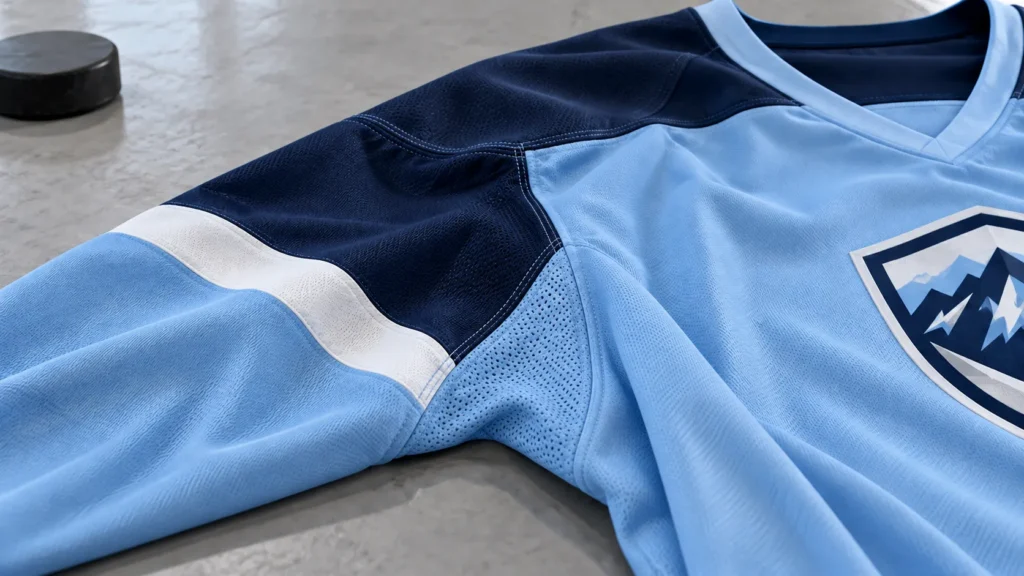
Most hockey jerseys use synthetic sportswear fabrics, with polyester being a common choice.
The exact fabric can vary depending on the manufacturer and jersey construction.
For a goalie jersey, the material should balance several factors:
Material Consideration | Why It Matters |
Breathability | Helps with comfort during extended play |
Durability | Handles repeated use and movement |
Weight | Avoids adding unnecessary bulk |
Flexibility | Supports upper-body movement |
Moisture management | Helps handle sweat |
Color retention | Helps maintain the jersey’s appearance |
For goalie jerseys, material should be evaluated together with seam quality, print method, wash durability, and the supplier’s finished-garment specifications.
How Should a Team Order Goalie Jerseys?

Treat goalie jerseys as a separate line item in the team order instead of mixing them into the player-size run.
- Step 1:Mark every goaltender on the roster and select the supplier’s goalie pattern.
- Step 2:Record the exact measurements requested by that supplier and note the chest-and-arm protector model/size when useful.
- Step 3:Compare the selected size with an existing jersey or sample before finalizing a large order.
- Step 4:Approve the artwork on the goalie template, not only on the player template.
- Step 5:Verify each goalie’s name, number, size, quantity, and cut on the final production list.
This workflow separates sizing decisions from design approval and reduces avoidable mistakes in mixed player-and-goalie orders.
Goalie Cut Hockey Jersey Buying Checklist
Before production, make four final checks:
- The order specifies a true goalie pattern, not a larger player cut
- Size chart clearly states whether measurements are body or garment based
- Proof uses the goalie template for logos, names, and numbers
- Final roster separates goalie sizes from player sizes
These checks focus on order accuracy rather than repeating every fit feature covered above.
Where to Get a Goalie Cut Hockey Jersey
Choose a supplier that publishes a goalie-specific size chart, identifies how its goalie pattern differs from the player pattern, and provides a design proof before production. For larger team orders, access to samples or clear garment measurements is especially useful.
For teams that need personalized hockey apparel, FastCustomJerseys provides custom hockey jersey options. Clearly identify the goaltenders on the roster and submit the measurements required for the supplier’s goalie cut.
Conclusion
A goalie cut hockey jersey should be selected by pattern and measurement, not by assuming that a larger player jersey will do the same job. Use the supplier’s goalie chart, verify the fit over the actual equipment, and keep goalie sizing separate in team orders.
That approach gives buyers a clearer, more repeatable way to choose the correct jersey while avoiding unnecessary oversizing and duplicated sizing assumptions.